
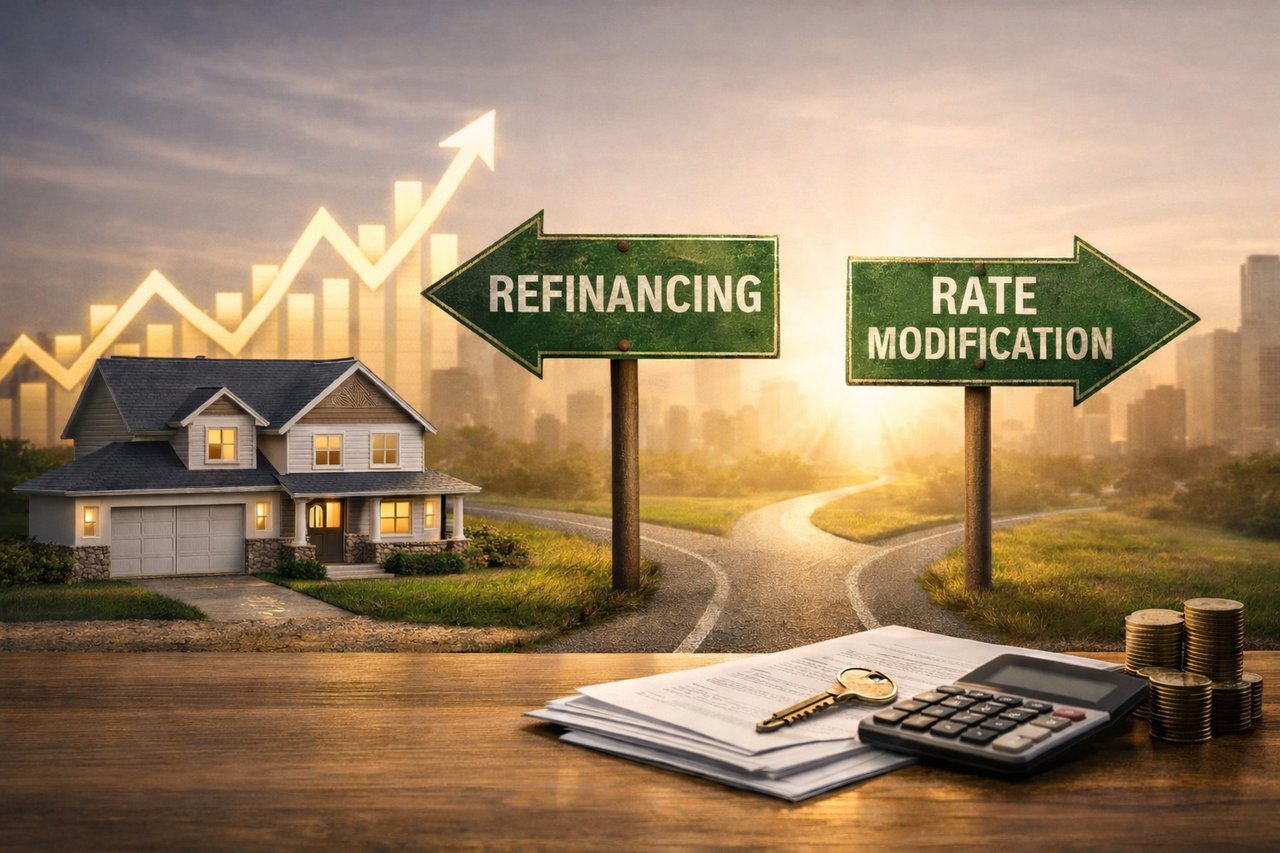
Before you read further, you might be thinking one of three things. (1) This is an ad. (2) We’re being paid by a lender. Or (3) this is just another mortgage gimmick. Fair assumptions. But let us assure you, we are not being paid to write this, and this is not a sales pitch. It is simply a financing option that most buyers are unaware of, and in this market, clarity matters. If you’re waiting for rates to come down before buying, or before refinancing your existing loan, you’re not alone. Even though interest rates are currently hovering near four-year lows, many buyers and homeowners are still hesitating, hoping for something even better. That instinct makes sense. No one wants to lock in a rate and feel like they missed the bottom. But most buyers are not actually trying to time rates. They are trying to avoid regret. No one wants to lock in a loan at 6.5 percent and see 5.75 percent six months later. The fear is not just the payment. The fear is feeling like you made the wrong move. Waiting feels strategic. It feels disciplined. It feels like control. But in many cases, it is simply postponing a decision because uncertainty feels uncomfortable. What if the decision is not actually “lock in now or wait”? What if the real question is whether you can build flexibility into the decision? There is a mortgage option that most people do not know exists. It is not a refinance, and it does not reset your loan term. It is called a rate modification, and one of the lenders we work with, BMO, offers it on their jumbo loans.
What a Rate Modification Actually Is
A rate modification allows an existing borrower to adjust their interest rate downward without replacing the loan. There is no need for an appraisal, no need for income documentation, and no need for full underwriting. The process typically takes three to five business days. You keep your original payoff date, and your loan clock does not reset (that last part matters more than people realize). Modifications have been a meaningful benefit for fire victims in Pacific Palisades and Altadena. They have also helped homeowners navigating life changes such as retirement or job transitions that could otherwise make qualifying for a refinance more difficult or impossible.
How This Is Different From a Refinance
When you refinance, you replace your old loan with a new one. That means you need to qualify again with new underwriting, a new appraisal, new closing costs, and your loan will typically reset to a new 30-year term. A rate modification, in contrast, does not require requalifying, only a "soft" credit check. It is a streamlined process with a flat fee tied to loan size. There are no new title insurance fees and no escrow charges. You are not starting over. You are simply adjusting the rate. With BMO’s program, the current one-time flat fee for a rate modification runs between $3,000 and $4,000, depending on the size of the loan (traditional refinance costs can easily reach into the tens of thousands). That is a very different financial decision.
Why This Matters for Buyers Waiting on Rates
Many buyers today are trying to time the 'interest rate' bottom. The thinking goes like this: “I’ll wait until rates drop further, then I’ll buy.” But no one can predict the bottom. Not buyers. Not agents. Not economists. If rates are already near three-year lows, the bigger risk may not be rates rising dramatically. The bigger risk may be buyer competition increasing if rates dip even slightly more. Uncertainty is permanent. Flexibility is optional. What a rate modification offers is optionality. You can purchase now. If rates drop meaningfully later, you may have the ability to secure a lower rate without a refinance. A rate modification does not guarantee a better rate later. What it offers is emotional insurance. Instead of trying to perfectly time the market, you build flexibility into your financing strategy. Because the fee is relatively modest, the break-even period can often be measured in months rather than years.
Important Limitations
Let’s be honest. Banks do not create programs just out of generosity. A rate modification is a retention strategy. If rates drop, they would rather adjust your rate than lose your loan to a competitor through a refinance. But incentives can align. They keep your business, and you reduce your payment without the friction and expense of a full refinance. However, most large national lenders do not offer programs like this because many loans are sold into the secondary market. Once a loan is sold, simple rate adjustments are typically not possible. That distinction matters when choosing where to finance. With BMO’s program, the loan must be a jumbo loan, you must wait at least 12 months between modifications, and rates must improve by at least 0.50 percent. Terms may change, and although this program has been in place for many years, it is not guaranteed to remain indefinitely.
What This Means Strategically
For buyers, this reduces the fear of getting stuck with today’s rate. For homeowners considering a refinance, it may be worth understanding whether a streamlined adjustment exists before committing to a full reset of the loan. This is not a universal solution, and it does not replace the need to compare options carefully. But it does change the conversation. Instead of asking, “Should I wait?” the better question may be, “How do I structure this so I have flexibility?” In real estate, the people who win long term are rarely the ones who time perfectly. They are the ones who make clear decisions and build intelligent flexibility into their plan.
That is strategic. Mortgage strategy is no different.
Your Trusted Advisors,
Peter and Tregg
Copyright © 2025–2026 Peter Maurice and Tregg Rustad. All rights reserved. Unauthorized use, reproduction, or distribution of this content is prohibited.